
Campbell VINELink Custody Coverage
Virginia Jail VINE receives custody events from the Commonwealth’s local and regional jails. Campbell County Adult Detention Center is operated by Blue Ridge Regional Jail Authority, so a Campbell jail search belongs in that local-jail workflow. The official Virginia FAQ describes the service as free, anonymous, and available around the clock. It can report events such as release, transfer, escape, and death for participating jail records.
VADOC VINE is a related but distinct state-corrections workflow. It applies after a person is committed to the Virginia Department of Corrections. VADOC’s notification program can address transfers, anticipated release, and actual release for eligible registered recipients. A registration made against the Campbell jail record does not automatically carry into VADOC. The same is true in reverse.
Neither Virginia workflow covers a federal BOP prisoner. The BOP locator is the proper federal source. The Virginia Sex Offender and Crimes Against Minors Registry is also separate and limited to people with a current legal duty to register. It is not a general list of released Campbell County inmates.
Virginia Jail VINE is open to anyone who needs a participating jail status or alert. VADOC’s post-sentence notification channel has its own registration rules and audience. It can provide an anticipated release notice, ordinarily about thirty days ahead, followed by an update if that date changes. After an actual VADOC release, VADOC custody notifications stop. A Campbell jail registration does not enroll the user in that state program.
- VINE
- Victim Information and Notification Everyday, a custody-status and event-notification service.
- Reporting agency
- The jail or corrections body that supplied the displayed custody event.
- Transfer
- A move to another facility or custodian, not release to the community.
- PIN
- A private number used to confirm or manage certain telephone alerts.
Search a Campbell Inmate on VINELink
Open the official Virginia VINELink portal and search for one person. Exact identifiers matter. A common name can produce several records, and a person may have records from more than one reporting agency. Compare the details that the service exposes before opening or registering against a result. Do not treat the first similar name as a match.
- Select Virginia and the people or custody search offered by the live interface.
- Enter the person’s name and any available identifier or filter. Use spelling from the jail or court record when possible.
- Compare age or other identifying data, record ID, and reporting agency across possible matches.
- Open the exact record and read the full status phrase. Note whether the source is BRRJA, VADOC, or another jail.
- Write down the date and time checked. If the status indicates transfer, search the named or likely receiving system next.
A live JailTracker match supports current Campbell local custody at its last update. A VINE result reports a supplied event and may lag agency processing. For a broader check across jail, court, VADOC, and federal routes, use the Campbell County released-inmate search path. That sequence helps when the reporting agency or next custodian is uncertain.
The Virginia landing screen is shown in the captured official source. Open VINELink for Virginia to use the current interface.

The capture confirms the correct state entry point; the live result must still be matched to the right person and agency.
Campbell VINELink Release Fields
VINELink is an operational status and notification service, not a certified discharge record. The exact fields vary with the agency feed and live interface. Read only what the matching record actually displays. In particular, pair every “released” phrase with its reporting agency. BRRJA ending its jail custody is different from VADOC ending state custody.
| Field or item | What it can establish |
|---|---|
| Name and identifiers | Whether the selected result is likely the intended person |
| Reporting agency | Which jail or corrections system supplied the status |
| Custody status | The agency’s current or recorded wording for that custody record |
| Facility or location | The reported holding site or agency context, when shown |
| Custody event | A release, transfer, escape, death, or other supplied change |
| Notification option | Whether registration is offered for that person-record and event type |
A released result supports that the named agency recorded the end of its custody event. It does not automatically show the next destination. If the record or alert says transferred, use VADOC for state authority, another jail’s system for a local move, BOP for a sentenced federal prisoner, or ICE’s locator when an immigration handoff is documented. The closing BRRJA booking-and-release record is the documentary fallback for the Campbell jail event.
A court record provides another check for a known person. Campbell General District Court commonly holds misdemeanor, preliminary felony, and bond activity. Circuit Court carries felony disposition and sentencing, plus district-court appeals. The latest signed order can explain the authority for release, but it may precede jail processing. Reconcile the order with the VINE event and BRRJA’s closing record instead of treating any one source as complete.
Note: Save the exact status phrase and reporting agency because a shortened paraphrase can erase the difference between release and transfer.
Register for Campbell Release Alerts
Searching does not register an alert. Registration attaches the chosen contact method to a specific matched record. Complete it only after checking the person and reporting agency. The current screen controls which delivery methods are offered, so phone and email should be described as available options only when the interface presents them.
- Open the correct specific-person record after comparing the available identifiers and reporting agency.
- Select “Get Notified” or the notification control shown on the current record.
- Choose an offered delivery method, then enter the requested telephone number, email address, or other destination.
- Create and confirm a PIN when prompted for telephone notifications. Keep it private.
- Finish the on-screen confirmation. Retain the registration details needed to manage or acknowledge later notices.
The PIN may be used to acknowledge a call or manage notices. It is not an inmate ID and should not be shared. Registration is record-specific. If BRRJA transfers the person into VADOC authority, follow Virginia’s state workflow and any eligibility rules rather than assuming the local registration remains active.
Contact data used for an alert should be entered only in the official interface. A person who changes a telephone number or email address should use the service’s current management process to update the registration. Do not post the private PIN with a name or custody record. An alert is most useful when the recipient can identify the matched agency and promptly check the destination after a transfer notice.
Campbell Jail and VADOC Alerts
Campbell County’s most important VINE detail is the split between Virginia Jail VINE and VADOC VINE. BRRJA may close its custody event when a person leaves Campbell County Adult Detention Center for VADOC. A local alert may then use release or transfer wording even though the person is still confined under state authority. Virginia’s official workflow materials specifically warn against treating the local event as proof of freedom.
When that transition is possible, re-run the person through the VADOC Inmate and Supervisee Locator. A state correctional facility location supports continued confinement. A community corrections district can indicate physical release to probation or parole supervision. A missing result still needs care because daily updates may lag and the name or identifier may differ.
The official Virginia Jail VINE and VADOC VINE workflow is the source for this distinction. It is more useful than guessing from one alert word.
Campbell Jail VINE Phone Access
The Virginia Jail VINE FAQ lists the automated telephone number as 1-800-467-4943 and describes local-jail status access as free, anonymous, and available twenty-four hours a day, seven days a week. Those hours describe access to the service. They do not establish how quickly BRRJA enters a Campbell event or how long a past release remains searchable.
The official FAQ capture gives the state jail-service context. Review the live Virginia VINE source for current instructions.
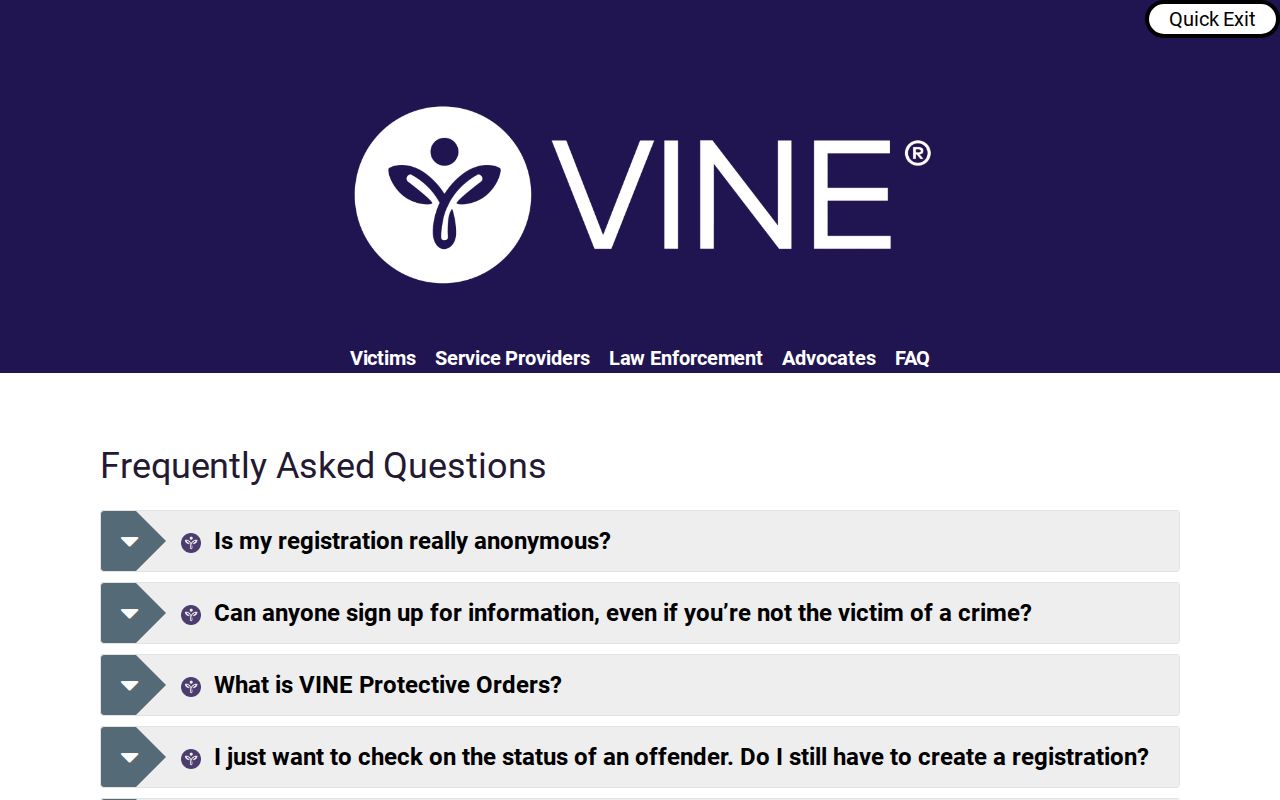
The state page confirms participation and access channels, while BRRJA remains the source for Campbell’s underlying jail record.
Note: Service availability does not guarantee that a newly entered release or transfer appears without agency processing delay.
Campbell VINELink Release Limits
VINELink cannot certify final discharge. It may lag, depend on agency data, or show only the end of one custodian’s event. It does not cover BOP inmates, and it does not replace the Campbell court record, BRRJA release entry, VADOC computation, or executed release papers. No result does not prove release. It may reflect spelling, search scope, delayed data, or another system.
Use the BOP locator when a federal sentence is involved. For a federal pretrial detainee, follow the court and U.S. Marshals route because no public Marshals released-person locator was verified. If a Campbell record identifies an immigration transfer, use ICE’s current detainee system. None of these federal systems should be folded into the Virginia VINE result.
For firm proof of the Campbell custody event, request the existing closing booking-and-release entry from BRRJA. Ask for the booking number, release date and time, recorded release type, releasing authority, and destination or receiving agency if present. That narrow request can document what VINELink merely announced.
Use identifiers across that follow-up. A booking number ties the request to the Campbell jail event. A seven-digit DOC ID supports the state locator search. A federal register number belongs in the BOP system. Keeping each identifier with its agency reduces same-name errors and makes it easier to trace a person from local custody into state or federal control.
Every result should be time-stamped in notes. Say that the system reported a status at the stated time, then check again if the release or transfer is still being processed. This phrasing keeps a changing operational entry from being treated as a permanent fact and makes later differences easier to reconcile.